Final NYC Marathon Reflections

You know what? I’ve done all the training, reviewed the course and elevation maps and strategy guides, talked ad nauseum about and obsessed over the NYC Marathon for months. I’ve also expressed my gratitude for all those who have helped me get to this point, and understand that even though I run for myself, I get to do so because of the amazing people in my life. So, if I were to post a “final marathon reflections,” I would just rehash old posts and yadda yadda yadda.

TCS NYC Marathon

Happy Halloween and Good Luck from Jim and H. B. Skeleton!

So, instead of posting all that, I’m just going to say this:

Good luck to everyone running the NYC Marathon tomorrow! Thank you to everyone volunteering at the NYC Marathon! Thank you to my family for organizing a post-race party! Thank you to everyone who has wished me luck! And thank you to everyone who has stopped by this blog, read my rambles, and maybe even enjoyed them!

Good luck, everyone! We got this.

TCS NYC Marathon

And an unofficial GOOD LUCK from NP_NYC!

9/29/2015: Morning Run: 5:30 a.m., 6.2 Miles, Central Park Loop; Preparation v. Results

This Morning’s Run

My left quad is still slightly sore from the Bronx 10-Mile, but not sore enough to warrant a day off. So, back to marathon training! This morning’s run felt decent, although the soreness in my left quad held my pace back a bit. I started to find my pace toward the end of the run, but no worries. The first run after a 10-mile race plus extra mileage will likely never feel 100%.

Later today I’ll hit the gym for leg and core exercises. And stretching. Lots of foam rolling and stretching!

Jim Gets Philosophical: Preparation v. Results

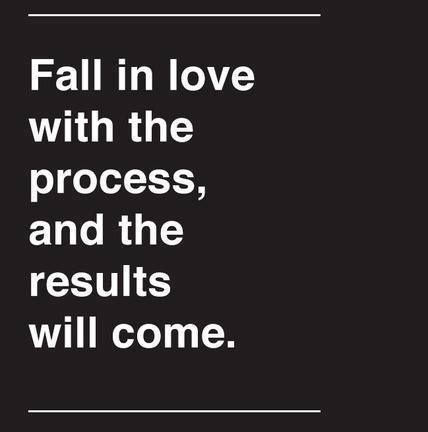
Fall in love with the process

 I found an Instagram post yesterday that read “Fall in love with the process, and the results will come.” I really like this sentiment. I found it after reading a couple Bronx 10-Mile race recaps that focused almost exclusively on the runner’s results. My own recap discusses my results (although I tried to recap what the actual race felt like, and attempt to demonstrate my training and race preparation through Time on My Feet). The post reminded me that the most important part of all this racing is the process we runners engage in as we train and prepare.

I’ve found that when I make my race results (or results in any area of my life) the only goal toward which I am striving, I tend to attach more value than I should to them. If I attach too much value to them, I let the results dictate my self-worth. When the results dictate my self-worth, they make me anxious. When I get anxious, I become less capable of performing at a high level. When I am less capable of performing, I don’t achieve the results I’m hoping for anyway, which leads me right back into the cycle of anxiety, decreased capability, and underachievement.

So, I focus on the aspect of competition that I can control: the preparation. I make a training plan and I stick to it. That doesn’t mean I write the plan on Day 1 and follow every single letter on it: I adjust for fatigue or extra energy when necessary, add races and other events as they come up, and try to live a full life outside of running. I take suggestions from friends and athletes who have trained before me, and am always willing to try new things. I try to share my knowledge with others, and support people who are trying to improve their own running. I hold myself accountable, and don’t blame others when I miss or don’t complete a workout because I didn’t sleep enough the night before. I am ultimately responsible for whether I do the work.

If I prepare well, I can stand in the starting corral and feel confident that whatever my race result, I did my best to get to the line. Sure, I might miscalculate something during the race, or maybe I underestimate race difficulty during my preparation. Even so, I can’t devalue my experience because of these missed opportunities. What I can do, however, is learn from the experiences and do better next time.

I still enjoy my good results! I enjoy them, however, in the context of my preparation. The most satisfying moments are those when you achieve something, and you can reflect on how hard you worked to achieve it, recognizing your effort and the help you received along the way. That’s how I feel about my results from the Bronx 10-Mile: I worked myself back from injury through physical therapy and a totally new training style, lifted lots of weights and did tons of core exercises, went to bed early and woke up even earlier to keep my training consistent, and I crushed my previous longer distance race paces by over a minute per mile. I say this not because I’m arrogant, but because I know how hard I worked to get to this point. I can pause for a moment of gratitude, and then it’s back to the work.

The problem that most people have with training is that training can feel uncomfortable both mentally and physically. Even though I do most of my training runs at a moderate pace, I still feel soreness. I also get mentally worn out some days, and just want the running to end! I’ve learned, though, that there’s joy in fighting through the discomfort. It doesn’t always come instantly in the form of endorphins. Sometimes it hits you when you’re walking down the street and you think, “Hey, you stuck with that workout and now you have nothing to regret.” Sometimes it hits at the end of a race, when you cross the finish line and think, “It wasn’t any one workout that got me here, but those times that I could have quit and didn’t certainly helped.” And finally, it hits you when you realize that you’re building a personal accountability that reflects in other areas of your life, including your work and personal relationships.

Fall in love with the process. Every step, every ache, every achievement. Once you’ve got that down, the results don’t even matter that much.

Happy running, everyone!

Maffetone at Work! Also 9/22/15: Morning Run, 5:30 a.m., 6.2 Miles, Central Park Loop

I’ve written a lot of training run recaps. This morning’s will be short: I ran this morning, and it was lovely. Check out my Training Plan for updates on what I’m up to on a daily basis. I’ll be expanding that page to include the exercises I do at the gym, and welcome any and all feedback on my plan.

Now, for something far more interesting!

I have posted relentlessly about Dr. Phil Maffetone’s 180 Formula for heart rate training, and written about my experience training almost exclusively using this method for almost five months. I have discussed how I PR’d at the Percy Sutton 5k—running a 5:56 per mile pace and besting my previous 5k PR by over a minute—by performing training runs at my maximum aerobic heart rate, and doing (at most) three anaerobic workouts prior to the race. In short, Dr. Maffetone’s method has worked for me. But what about for other people?
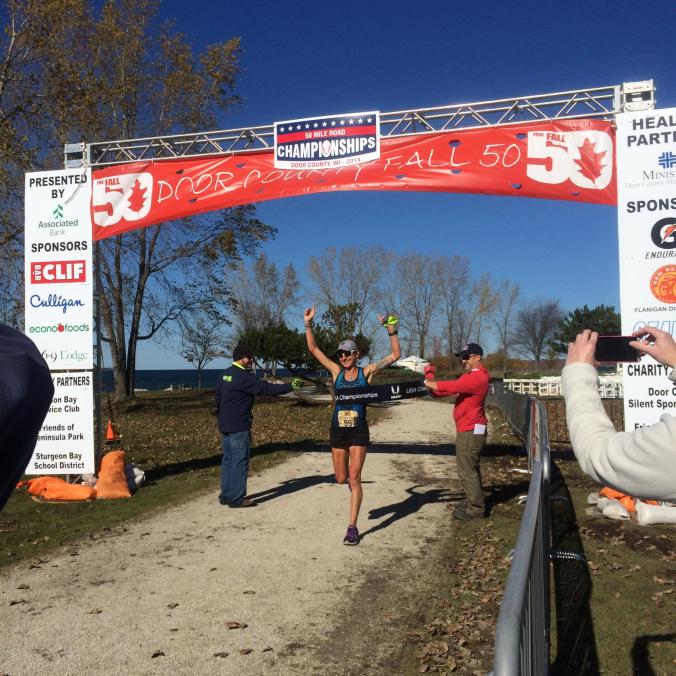
Larisa Dannis

Larisa Dannis (reposted from Runner’s World)

Here is a great example from Runner’s World of the Maffetone Method at work. Larisa Dannis, a former recreational runner, ran the USA 50-Mile Road Championship in 5:59:11 in October of 2014, becoming only the third American woman to run 50 miles in under six hours. She will represent the United States in the IAU World 100K Championships in Doha, Qatar in November. She also came in second in the women’s race at the Western States 100-Mile Endurance Run, and was the first female finisher from the mass start at the 2014 Boston Marathon with a time of 2:44:14, only 74 seconds shy of qualifying for the Olympic trials.

How does she train? You can probably guess! From the Runner’s World article: “Dannis trains via the Maffetone Method, doing all of her training runs and races in very specific heart rate zones. It’s an unconventional approach, but one that’s helped her transform herself from a relatively average runner to one of the best American ultrarunners in just a few years.”

The article also discusses her specific heart rate training: “Dannis wears a heart rate monitor to make sure that she’s doing all of her training runs and races in the proper heart rate zone. Over time, she’s learned what heart rate she can sustain for various distances, and uses those numbers to guide her in all of her training and racing. For example, she averaged 134 beats per minute during the Western States this year, and she knows that she needs to be in the 163-165 range during a marathon.”

Finally, “Dannis spent nearly two years building her aerobic base, aiming to not exceed a set heart rate in training. She estimates that she still does more than 90 percent of her training at an easy, aerobic pace.” She has incorporated more speedwork into her routines over time, she says, which also contributed to her excellent finishing time at the 2014 Boston Marathon.

Dannis also employs the piece of the Maffetone puzzle that I am just starting to put together: the nutrition plan. From Runner’s World: “Dannis credits the transformation in her running to three things: training via the Maffetone Method, focusing on whole-body strength (she particularly likes kettlebells), and eating a whole-foods diet high in healthy fats and high-quality protein” (emphasis added).

Such a diet contradicts the common wisdom that runners need to consume a diet high in carbohydrates before, during, and after a race. Anyone who runs road races knows what I’m talking about: carbo-loading for two-three days before a race, sucking down multiple sugar-happy gels during the race, and pounding all sorts of pancakes and other starchy treats after the race as a reward for a job well done. The idea behind the carb-heavy diet is that the body burns lots of sugars while running, so the runner needs to consume lots of sugars to stay properly fueled.

A diet high in healthy fats and protein, however, combined with the maximum aerobic heart rate training advocated by Dr. Maffetone and others, leads the body to burn more fat for fuel. Fat is a more efficient energy source than sugar, and the body creates fewer harmful byproducts at a cellular level when training aerobically and burning fat. This allows faster recovery times, more efficient training, and overall improved health.

At least, that’s the theory. As I do more research, I will expand on this topic. For now, because Dr. Maffetone’s heart rate method has worked for me, I’m willing to explore his guidance on the dietary component of endurance sports. As one running buddy once said after declaring his love for tuna melts, “I sometimes wonder just how good I could be at this sport if I nailed the nutrition component.” Some “food” for thought. Get it?! I’m such a dork.

Finally, I like Dannis’ attitude about racing. She says, “‘Running has always been a very personal endeavor for me. I find satisfaction and excitement through challenging myself rather than competing with others.”

Love it. Focus on improving and running each race better than the last. Results come in many forms.

Happy running, everyone!