9/30/2015: Morning Workout: 5:28 a.m., November Project: Quad Torture!

Yesterday I posted a picture of the leg press machine at the gym after loading it up with 380 pounds. Between that, the glute machine (which also works the quads), squats, and the 6.2 mile run from the morning (which was sort of a recovery run after the Bronx 10-Mile), my quads could have used a day to chill.

Leg Press

Leg Press of doom

Alas.

This morning’s November Project NYC workout was all about the quads. We met at the Wards Island side of the 102nd Street walking bridge. Rain or shine! That’s how it works. You #justshowup. This morning: no shine, little bit of rain. Nothing too hard to handle.

The workout: Starting on the Ward’s Island side of the bridge, run onto a large turf field to the corner created by the midfield and side lines. 10 burpies. Run across the midfield line to the far corner. 10 crunches. Run down the sideline to the corner kick area of the field. 10 mountain climbers. Run across the goal line to the far corner. 10 squats. Then back to the start. Lunges across the circle area in front of the bridge. Run across the bridge and down onto the East Side walking path. 10 lurchies (lunges performed while making circles with your arms). Run back across the bridge. Lunges across the circle at the other side of the bridge. Repeat for 35 minutes.

As you can imagine, between the mountain climbers, squats, lunges, lurchies, and running up and down the inclines on the walking bridge, the quads took a beating. I slowed down on my third loop. Fall racing season takes it toll!

A good workout, though! It’s awesome that people showed up in the rainy weather and pushed themselves across the bridge and through all the exercises. That’s the beauty of NP_NYC: When you feel like quitting, you look up and see 20 other people fighting through the discomfort and finding ways to enjoy it, and you just keep going and fighting and trying to smile. High fives help!

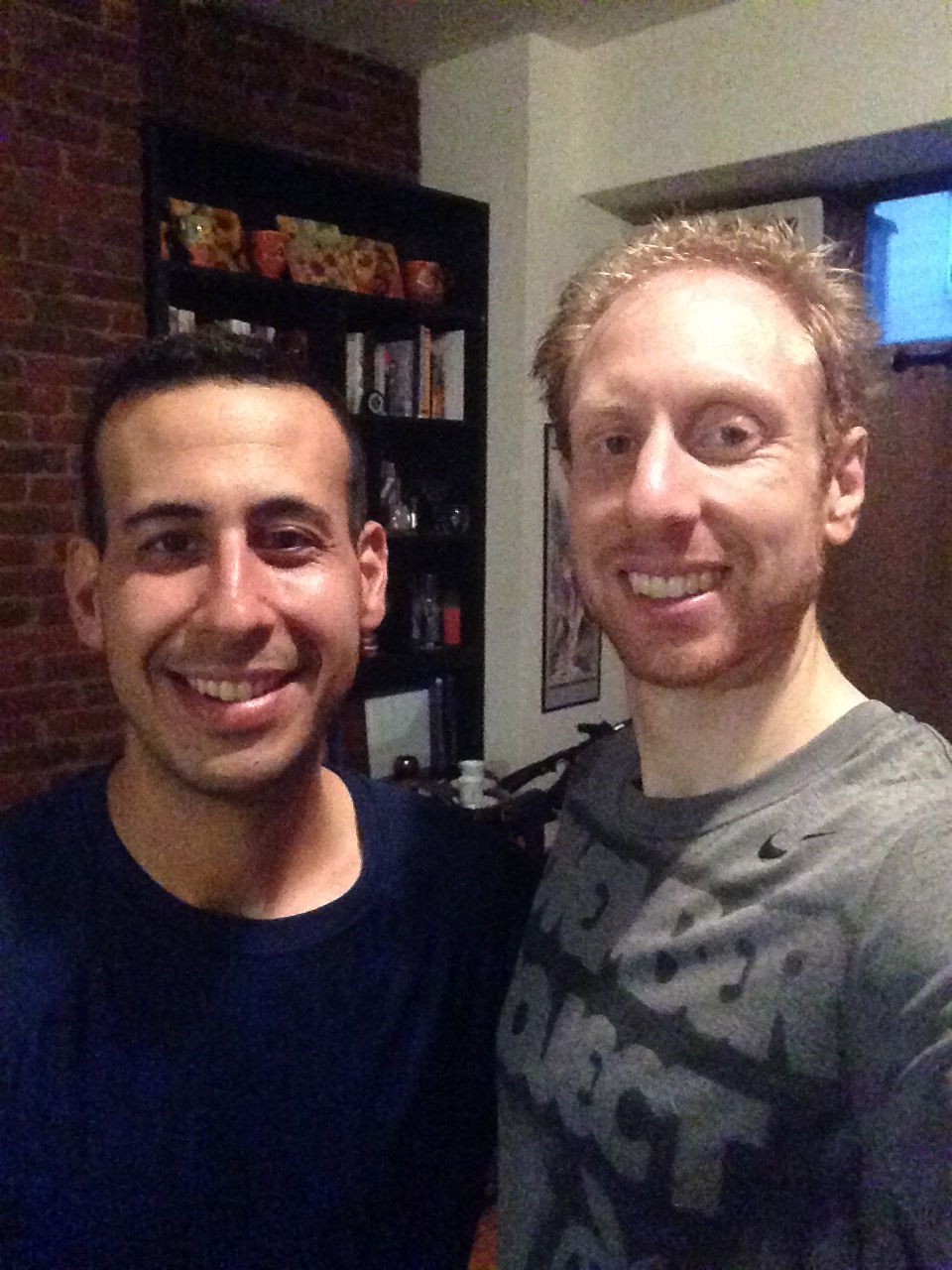
I also introduced my buddy Eric to the group this morning. Eric and I went to law school together, and he’s running his first half marathon next weekend in Brooklyn! He reached out about checking out NP_NYC, so we headed over together this morning. At the end of the workout, he was drenched in sweat and had a huge smile on his face. Glad you had fun, Eric! #justshowup and ye shall be rewarded with smiles and hugs from other very sweaty people!
November Project NYC

Look at that smile! He’ll be back 😉

Happy running, everyone!
9/29/2015: Morning Run: 5:30 a.m., 6.2 Miles, Central Park Loop; Preparation v. Results

This Morning’s Run

My left quad is still slightly sore from the Bronx 10-Mile, but not sore enough to warrant a day off. So, back to marathon training! This morning’s run felt decent, although the soreness in my left quad held my pace back a bit. I started to find my pace toward the end of the run, but no worries. The first run after a 10-mile race plus extra mileage will likely never feel 100%.

Later today I’ll hit the gym for leg and core exercises. And stretching. Lots of foam rolling and stretching!

Jim Gets Philosophical: Preparation v. Results

Fall in love with the process

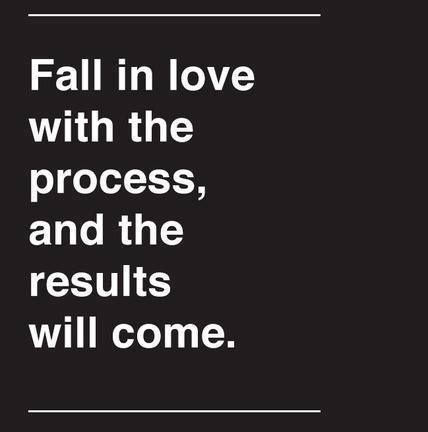
 I found an Instagram post yesterday that read “Fall in love with the process, and the results will come.” I really like this sentiment. I found it after reading a couple Bronx 10-Mile race recaps that focused almost exclusively on the runner’s results. My own recap discusses my results (although I tried to recap what the actual race felt like, and attempt to demonstrate my training and race preparation through Time on My Feet). The post reminded me that the most important part of all this racing is the process we runners engage in as we train and prepare.

I’ve found that when I make my race results (or results in any area of my life) the only goal toward which I am striving, I tend to attach more value than I should to them. If I attach too much value to them, I let the results dictate my self-worth. When the results dictate my self-worth, they make me anxious. When I get anxious, I become less capable of performing at a high level. When I am less capable of performing, I don’t achieve the results I’m hoping for anyway, which leads me right back into the cycle of anxiety, decreased capability, and underachievement.

So, I focus on the aspect of competition that I can control: the preparation. I make a training plan and I stick to it. That doesn’t mean I write the plan on Day 1 and follow every single letter on it: I adjust for fatigue or extra energy when necessary, add races and other events as they come up, and try to live a full life outside of running. I take suggestions from friends and athletes who have trained before me, and am always willing to try new things. I try to share my knowledge with others, and support people who are trying to improve their own running. I hold myself accountable, and don’t blame others when I miss or don’t complete a workout because I didn’t sleep enough the night before. I am ultimately responsible for whether I do the work.

If I prepare well, I can stand in the starting corral and feel confident that whatever my race result, I did my best to get to the line. Sure, I might miscalculate something during the race, or maybe I underestimate race difficulty during my preparation. Even so, I can’t devalue my experience because of these missed opportunities. What I can do, however, is learn from the experiences and do better next time.

I still enjoy my good results! I enjoy them, however, in the context of my preparation. The most satisfying moments are those when you achieve something, and you can reflect on how hard you worked to achieve it, recognizing your effort and the help you received along the way. That’s how I feel about my results from the Bronx 10-Mile: I worked myself back from injury through physical therapy and a totally new training style, lifted lots of weights and did tons of core exercises, went to bed early and woke up even earlier to keep my training consistent, and I crushed my previous longer distance race paces by over a minute per mile. I say this not because I’m arrogant, but because I know how hard I worked to get to this point. I can pause for a moment of gratitude, and then it’s back to the work.

The problem that most people have with training is that training can feel uncomfortable both mentally and physically. Even though I do most of my training runs at a moderate pace, I still feel soreness. I also get mentally worn out some days, and just want the running to end! I’ve learned, though, that there’s joy in fighting through the discomfort. It doesn’t always come instantly in the form of endorphins. Sometimes it hits you when you’re walking down the street and you think, “Hey, you stuck with that workout and now you have nothing to regret.” Sometimes it hits at the end of a race, when you cross the finish line and think, “It wasn’t any one workout that got me here, but those times that I could have quit and didn’t certainly helped.” And finally, it hits you when you realize that you’re building a personal accountability that reflects in other areas of your life, including your work and personal relationships.

Fall in love with the process. Every step, every ache, every achievement. Once you’ve got that down, the results don’t even matter that much.

Happy running, everyone!

9/24/2015: Morning Run, 5.2 Miles: Pacing Yourself in Training and Races

After hitting the gym on Tuesday for the first time in two weeks and completing my leg circuit, and then completing an intense 8.5 mile November Project NYC workout yesterday, I woke up sore. I usually recover quickly, but Tuesday’s gym workout really zonked my muscles.

So, what happens when we’re scheduled to run but we’re sore? We run! But we modify the run. I foam-rolled for a couple extra minutes before and after the run, cut my usual 6.2 mile route short by a mile, and ran at an easy pace. While most of my training happens in an aerobic heart rate zone between 134-144/145 beats per minute, this morning’s run barely cracked 135 beats per minute.

I ran instead of resting because I’m running the Bronx 10 Miler on Sunday, and wanted  two solid rest days instead of a rest day today followed by a Friday run followed by rest on Saturday. I believe two days with Time OFF My Feet will have me ready for the 10 Miler.

Unsurprisingly, this morning’s run highlighted my competitive nature. While I try to live by the statement, “You don’t win at training, but you can lose by overtraining,” I can still try to outrun other runners during training runs. This morning, therefore, while running at a reduced pace, I found myself pushing harder when runners passed me. I had to remind myself to run my own pace, and to keep my stride easy and effortless.

Keeping the focus on my pace has helped me during races as well. For example, when I ran the NYRR 10k Spring Meltdown in March, I followed a very specific race plan: Run miles 1-2 about 10 seconds slower than goal pace; run miles 3-4 at goal pace; and run miles 5-6.2 at  about 10 seconds faster than goal pace, focusing on passing runners only during these final 2.2 miles. I remember three or four guys barreling past me around miles 1.5-3, at which time I had to remind myself to focus only on my race. When I finally increased my pace at mile 5, I passed all of these runners. I finished in 39:47, my first sub-40 minute 10k, good enough for 33rd place out of 1,878 finishers.

I employed a similar strategy when I ran the Percy Sutton 5k in August, although I abbreviated the pacing strategy: Run the first mile about 5 seconds slower than goal pace, the second mile at goal pace, and go crazy on the final 1.1 miles. Again, I remember numerous runners skipping past me during miles 1-2. When I turned up the heat during mile 3, I cruised past most of these runners, and never saw them again. As I’ve posted about before, this performance snagged a 75th place finish out of 4,727 runners.

While these examples demonstrate good race strategy, I would be lying if I said that I’ve always paced well. For example, when I ran my second marathon, the 2004 Marine Corps Marathon in Washington, DC, I completely hosed the pacing. I was undertrained and overconfident, having completed my first marathon earlier that year with a negative split. I cruised through the first half at a pace much faster than I could ever sustain at that point in my running career. By mile 14 I had to walk because my quads felt like wooden blocks under my skin. I “completed” (I can’t say that I ran) the second half about 40 minutes slower than the first. I also spent days afterward recovering. Poor training, terrible execution.

To a lesser extent I had a difficult time with the last four miles of last year’s Staten Island Half. I trained well for this event, although I ran an impromptu 13.1 miles while out in San Francisco a few weeks before the event. I was cruising along for the first eight miles until the course hit a large hill around mile nine. Unprepared for the hill, I ran it way too hard in an effort to maintain my race pace. The result: my pace dropped from 7:40/mil to 8:15/mile for the final four miles because I trashed my quads and could not recover.

The lessons from these episodes? I take away three things:

  1. Know your race pace. Before you begin a race, have a sense of what your race pace will be, and develop a strategy on how to run the race so that your average pace will equal that predicted race pace.
  2. Know your course. When I ran the 2014 Staten Island Half, I did not look at the course map or elevation chart. I suffered as a result because I didn’t plan for the hill at mile 9. When I ran the NYRR 10k Spring Melt Down, however, I knew the course inside and out (it’s the Central Park Loop). Similarly, when I ran the Percy Sutton 5k, I researched and knew that the first mile was mostly uphill and that the first half of mile three was entirely downhill. I developed a race strategy to take these elevation changes into account.
  3. Be willing to adjust. Had I taken a deep breath at mile nine of the 2014 Staten Island Half and said, “Don’t worry about charging up this hill,” I might not have lost so much pace for the rest of the race. Unexpected things happen during races. The course might be tougher than anticipated, or maybe you have a tight quad that won’t release. Adjust. And don’t be too hard on yourself if you run slower than anticipated. Reflect, learn, and remember that we run because we enjoy the sport.

As always, happy running, everyone!