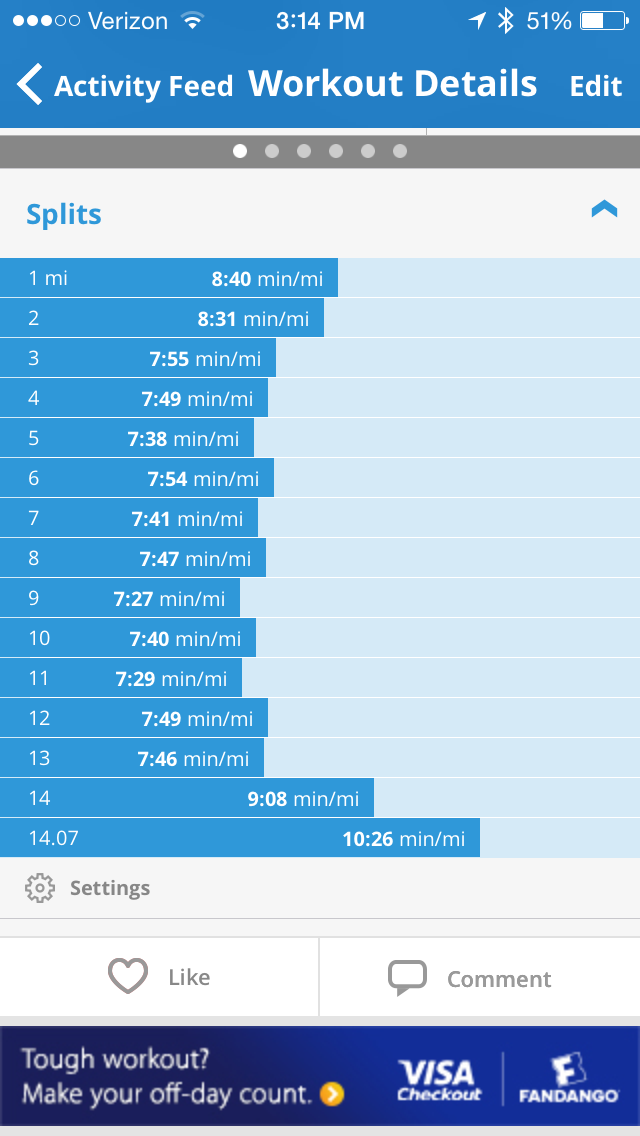
9/8/15: Morning Run MAF Test, 5:30 a.m., 5 miles plus warm-up and cool-down, New York Sports Club

If you have read my blog entries, you have seen my links to Dr. Phil Maffetone’s website. I have been following Dr. Maffetone’s “180 formula” for nearly three months as I train for the TCS NYC Marathon, building a solid aerobic base. While I might write a lengthier post on the Maffetone Method, many others have already done the same (such as Daily Burn and The Running Man), and some disagree with the Method (like Strength Running).

Here’s the short version: For endurance athletes, Dr. Maffetone advocates training slower to race faster. Because the aerobic system is the most important system involved in endurance training and racing, he advocates building a strong aerobic base by training almost exclusively in an aerobic training zone.

To calculate your aerobic training zone, Dr. Maffetone created the “180 Formula.” You subtract your age from 180 and adjust the number based upon other factors such as illness, training, and injury history. The result is your maximum aerobic heart rate, under which you should do all your training, ideally in a zone between that number and a heart rate ten beats per minute slower.

So, for example, my maximum aerobic heart rate as determined by the formula is 144, so I train between 134-144 beats per minute. Recognizing that this is a “one size fits all” formula, I allow myself two beats per minute higher on the upper end of the spectrum, which means that I slow down when I hit 146 beats per minute.

Dr. Maffetone also recommends a 12-15 minute warm-up before and cool-down after each run, which allows the body to adjust to the stress and then to ease back into a state of relaxation at the end of a training session.

You might be wondering: What about anaerobic training, such as intervals, tempo runs, pace runs, or hill sprints? What about the speed work? These are the sessions most modern training plans contain. Dr. Maffetone does not entirely oppose this type of training, but advocates that runners build a solid aerobic based before incorporating any or too much anaerobic training into their regimes. Dr. Stephen Gangemi, a long-time Maffetone enthusiast, has a great piece about incorporating anaerobic training into a Maffetone-based training plan, and also lays out some of his disagreements with Maffetone’s method.

So, when does a runner know when to incorporate anaerobic training into his plan? Essentially, once a runner’s performance on the MAF Test has plateaued.

What is the MAF Test?

The Maximum Aerobic Function Test (“MAF Test”) is the method by which a runner can determine how well she has trained her aerobic system. Essentially, the runner performs a Maffetone-style training run (12-15 minute warm-up followed by 4-5 mile run at her maximum aerobic heart rate followed by a 12-15 minute cool-down) on a track, treadmill, or other flat surface and measures the pace per miles run, excluding the pace of the warm-up and cool-down. The pace of the first mile run at your maximum aerobic heart rate equals your maximum aerobic pace, and the paces of the following miles demonstrates how well you can maintain a pace over a distance. The runner’s pace will slow throughout the test, and if it doesn’t, it’s usually an indicator of an incomplete warm-up.  The test should be performed monthly and, if the runner is training using Maffetone’s method, her maximum aerobic pace should decrease (i.e., the runner should get faster while running at her maximum aerobic heart rate). If a runner plateaus and makes no improvement with her maximum aerobic pace over the course of a month, she might want to incorporate some anaerobic training into her workouts.

Since I returned from injury, I have performed two MAF tests. I performed both on a treadmill at the gym, warming up by walking for about six minutes, jogging for three to four minutes, and then running at a pace below my maximum aerobic heart rate for two to three minutes. I then run at my maximum aerobic heart rate for five miles, followed by a cool-down walk of about 12 minutes. I want to note that during the running portion, I am running right at 144-145 beats per minute, not at a rate in my aerobic training zone of 134-144 beats per minute described above.

I monitor my heart rate using the Fitbit App on my iPhone, which displays my instant heart rate as detected by my Charge HR wristband. I decrease the treadmill’s speed when my heart rate hits 145 or 146 beats per minute. I also occasionally need to increase the speed during the run when my heart rate falls to 142 or 143 beats per minute.

Here are the results of my two MAF tests:

Date and Mile 8/11/15 (Pace Per Mile) 9/8/15 (Pace Per Mile)
1 7:33 6:55
2 7:49 7:08
3 7:53 7:20
4 8:01 7:32
5 8:17 7:43

Before taking the first test, I was skeptical. Why analyze your speed at a pace well below your desired race pace? In The Big Book of Endurance Training and Racing, Dr. Maffetone indicates a correlation between a runner’s maximum aerobic pace and 5k pace (correlation chart near the bottom of the page). That, however, seemed open to criticism, as he bases his correlation on MAF tests he administered to clients, and he provides no sample size. Based upon his correlation chart, I could expect, with a maximum aerobic pace of 7:33 minutes per mile, to run a 5k at a 6:00 minute per mile pace. This seemed impossible. My previous best 5k pace was 6:17/mile, which I ran with lots of speed work and prior to injury.

However, one and a half weeks after the first MAF test, I ran the Percy Sutton 5k at a 5:56 pace. This aligns almost perfectly with Dr. Maffetone’s correlation chart. I became a true believer at that point.

One caveat to my training: I was injured on April 11, 2015, and did not run again until June 25. I did, however, swim, cycle, and use the elliptical during the time off my feet, and generally trained at an aerobic heart rate (this was before being introduced to the Maffetone Method). So, I think I reaped the benefits of training aerobically for almost two months before really embracing Maffetone’s method. I have also done some anaerobic sessions since returning from injury, which include the November Project workouts and the Percy Sutton 5k race, so I can’t say that I’ve followed Dr. Maffetone’s advice perfectly. What I can say, though, is that by slowing down the vast majority of my training, I am running faster.

Dr. Maffetone claims that his method provides additional benefits, including a reduced risk of injury and overtraining, and increased general health and wellness. While I cannot speak to these yet, I can say that I am getting faster, feeling physically healthy, and enjoying every minute of my training.

As always, happy running!

9/6/2015: Training Ride: 12:15 p.m to 6:15 p.m., 80 miles, New York City

Next Sunday, September 13, I will be riding in the NYC Century, a 100-mile bike tour through New York City. I am super excited because I missed the TD Five Boro Bike Tour due to my injury. This will be my first bike tour and my first century, so I have no expectations and just want to enjoy it.

White Plains Ride 1 White Plains Ride 3White Plains Ride 2

(sample of a ride to or from White Plains as recorded on MapMyRun)

To train, I’ve been riding twice a week. My mid-week ride takes me from the Upper West Side of Manhattan to my office in White Plains, New York, approximately 26 miles each way. I also do a weekend long ride, which started at 25 miles and increased between five and ten miles a week until this week’s 80-miler.

Silve Fox

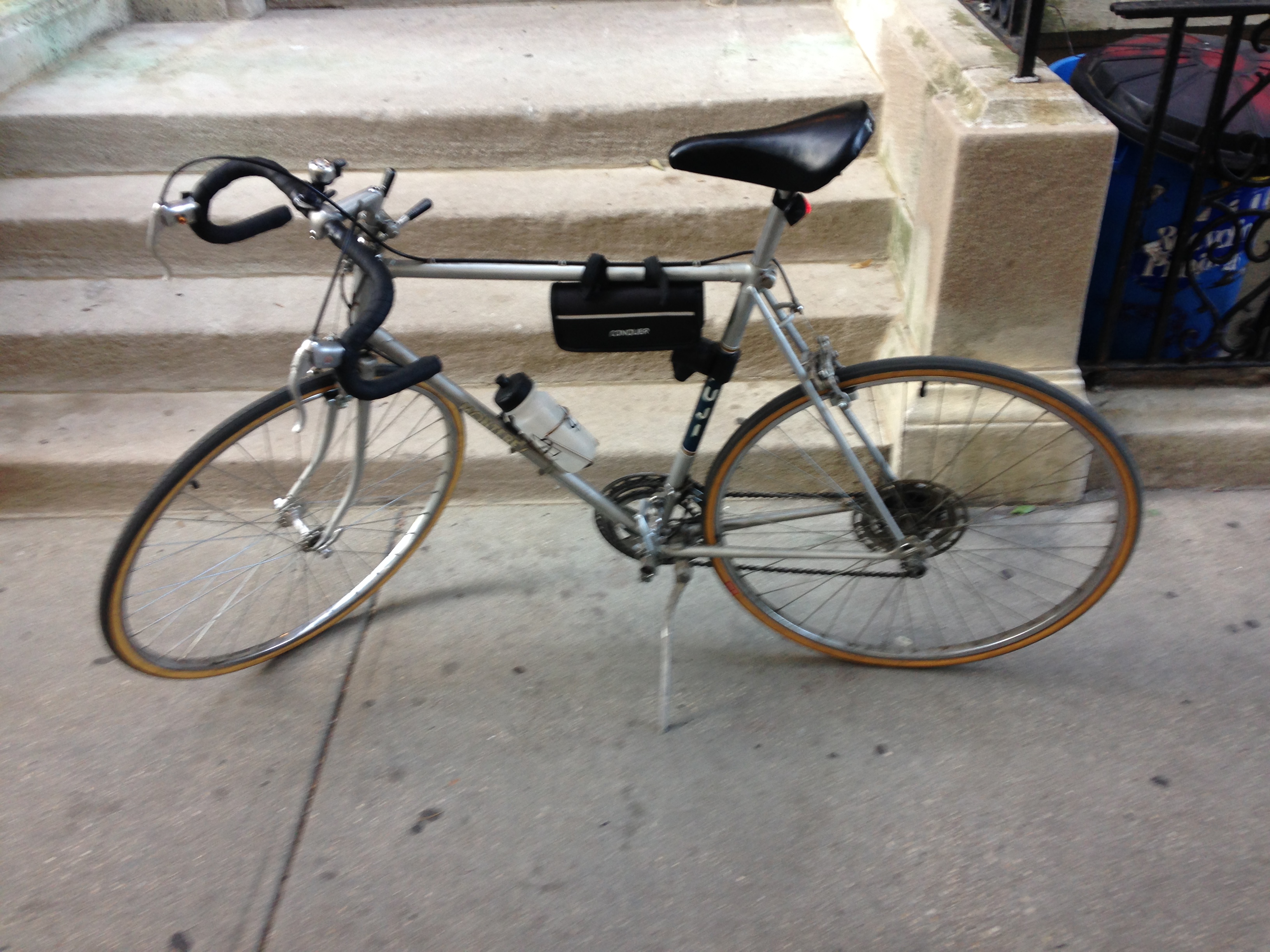
The Silver Fox

I bought my bike, a 30-year-old ten-speed Fuji Monterey nicknamed the Silver Fox, from Greenpoint Bikes in June of 2014. I had just moved to Bushwick, and wanted the bike to get around Brooklyn more easily. I was hooked within a few weeks of riding.

As I’ve increased my mileage and started to save money to buy a more modern cycle, I’ve learned more about different types of bikes, bike geometry, and bike fit. I’ve also learned that the Silver Fox is wrong for me in all categories. The frame is long, which does not properly support my long legs and short torso. No matter how much I try to get the bike to work for me, it will always come up short.

As a result, I had started to experience neck pain on any ride over 15 miles (that is, all my rides), and brought my bike to Master Bike Shop on 72nd Street near West End Avenue. My girlfriend bought her Fuji Absolute (hers is black) there, and I bought my clipless pedals and shoes there. I met with Joe, who does Master Bike’s bike fits, and he raised my seat, tilted my handlebars forward, and advised me not to ride on the hoods. These adjustments and advice saved my neck (literally) during my 80 miler. Thanks, Master Bike!

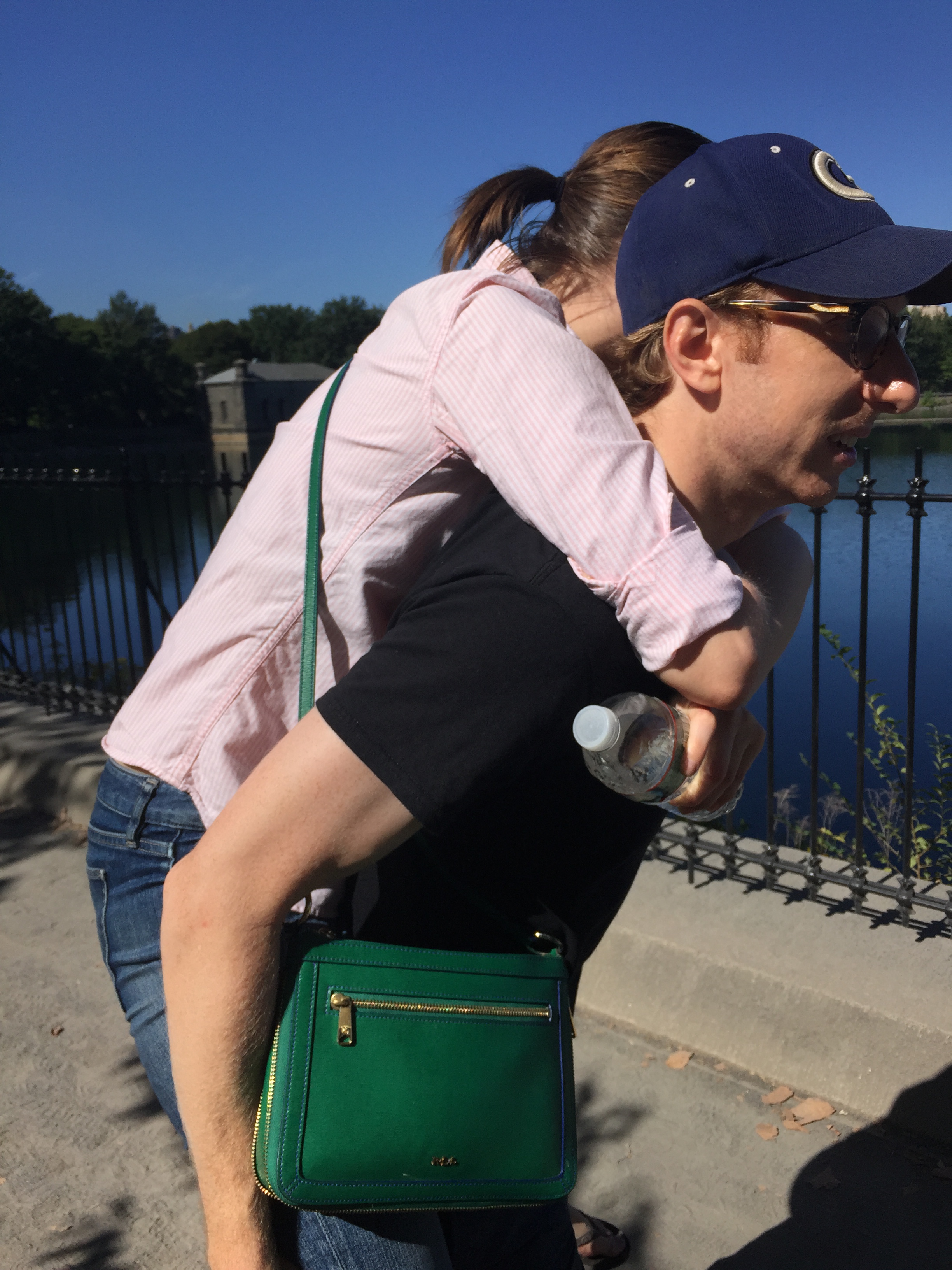
Only crazy people like me think of piggyback rides as an opportunity to train for the uphills on the bridges during the marathon, right?

Only crazy people like me think of piggyback rides as an opportunity to train for the uphills on the bridges during the marathon, right?

Armed with a more properly fit bike, and fresh off the prior day’s 14-mile marathon training run, I planned to rest, have fresh legs, and lots of good snacks. The only thing I had, however, was the rest. Before my ride, I walked five miles with my mom, sister, and girlfriend, and spent time carrying the girlfriend around the Central Park reservoir. I’ll call it “training for the bridges” during the NYC marathon! Then, I realized that I had left my KIND Dark Chocolate Chunk bars at my office, and all I had in my apartment was a package of nuts and raisins, some pinola/chia snacks, and a plastic sandwich bag filled with Puffins a/k/a a large helping of sugary goodness. Fingers crossed that this measly 700 calories plus water would get me through 80 miles, I foam-rolled my IT bands, hopped out the door and hit the roads.

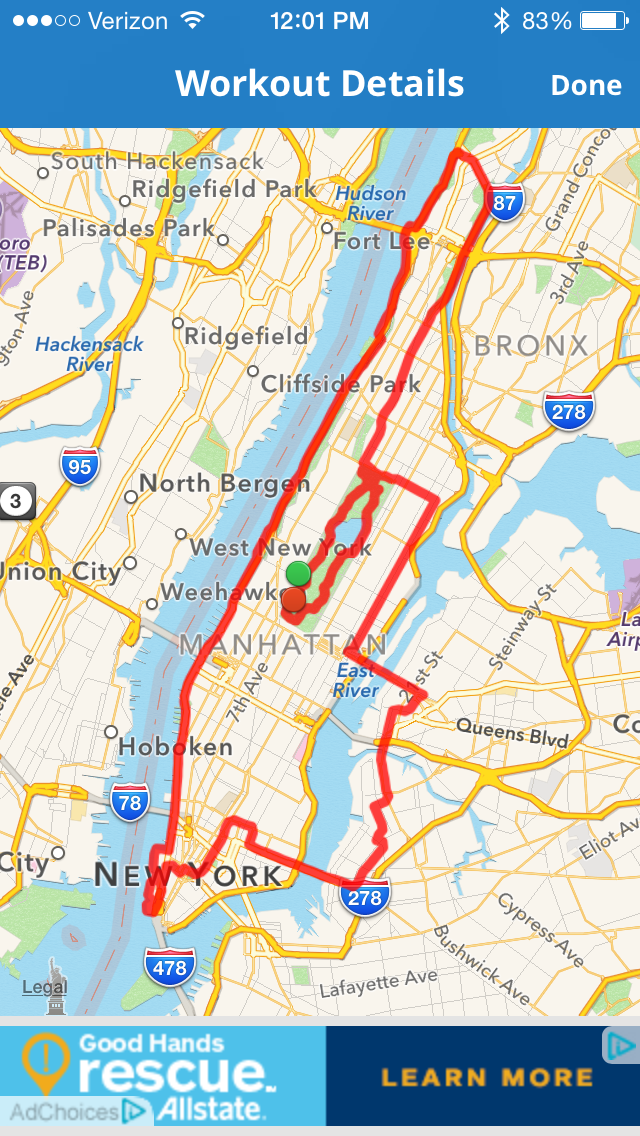
My 80-mile route

My 80-mile route

Here’s the route I followed: I did half a loop in Central Park, and headed north through Harlem on St. Nicholas Avenue. I then rode alongside the Harlem River, traveled west to the Hudson River Greenway, and down to the southern tip of Manhattan (about 23 miles). I then rode through the Lower East Side and across the Williamsburg Bridge, through Williamsburg and Greenpoint, across the Pulaski Bridge into Queens, across the Queensborough Bridge and up 1st Avenue to 111th Street, and across 111th Street and into Central Park for a half loop (about 39.6 miles). After a short refueling break, I rode six full loops of the Park and two lower loops. My phone died at 76.5 miles, so I didn’t capture the final 3.5 mile splits.

The NYC Century is a tour on open roads, so I wanted to train on the streets. This would have been great at 6 a.m., but not at noon. I nearly got doored four or five times, and I had to stop at lots of traffic lights. Even the Hudson River Greenway drove me nuts, with harsh wind gusts and people clogging the paths. Through the southern tip of Manhattan, I was not feeling it.

Summing up my sentiments after the first 23 miles of my ride.

Summing up my sentiments after the first 23 miles of my ride.

The Williamsbridge Bridge and Brooklyn were great. Riding through Brooklyn and Queens is lovely because they’re both much less crowded than Manhattan, and even the Queensborough Bridge is a smooth ride. First Avenue is mostly flat and, despite numerous delivery guys riding the wrong direction in the bike lane, the ride was pleasant. By the time I returned to Central Park, though, I was ready to put in smooth, steady riding that did not involve stopping every three minutes for traffic.

I did one new thing on this ride: I drank a can of Coke after my fourth of six full loops of the Park. I have heard from numerous endurance athletes that a caffeinated beverage late in the day can re-energize the system. Let me tell you, these folks are absolutely right. I didn’t know how tired I was until the caffeine and sugar hit my brain. My final two full loops and two lower loops felt like I had just started riding.

I felt good when I finished, and am ready for the Century next week. I will be doing one more mid-week ride beforehand (probably a 25-miler home from work), and then I’ll get some sleep before the big day. Let me know if you’re riding the Century!

Happy riding and running!

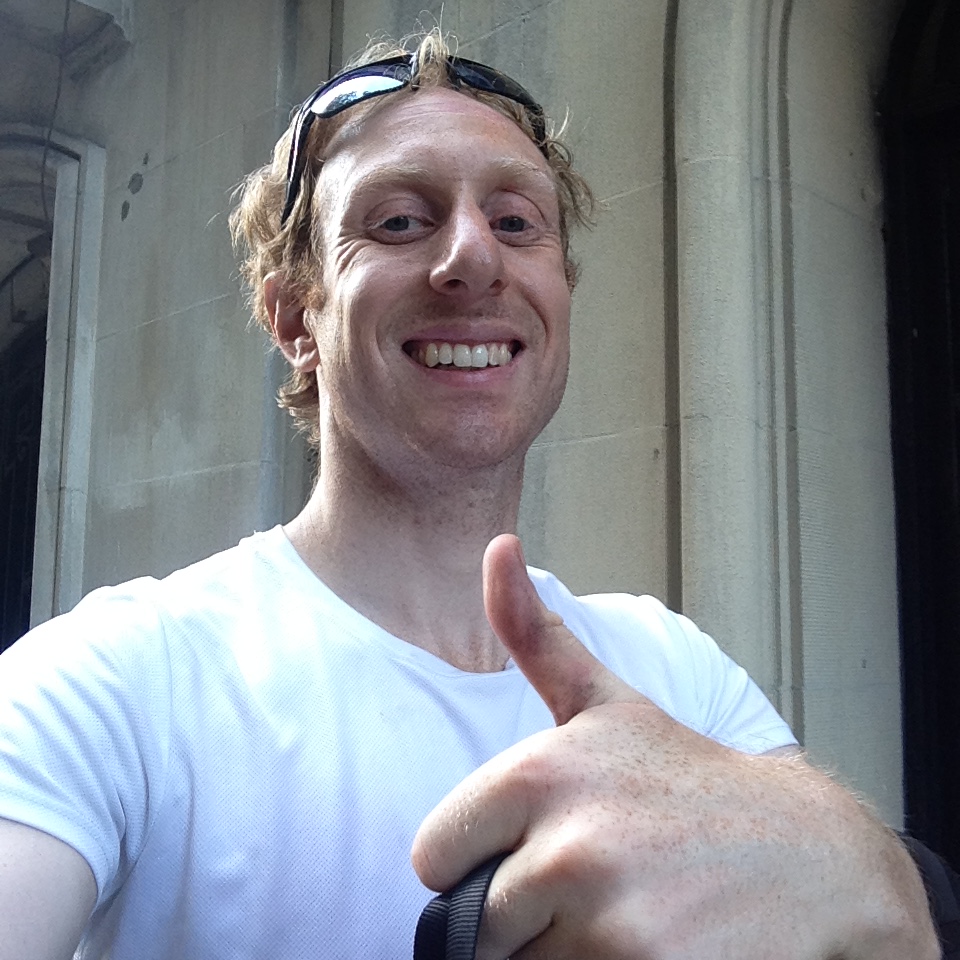
Done! Pleasantly tired but ready for more!

Done! Pleasantly tired but ready for more!

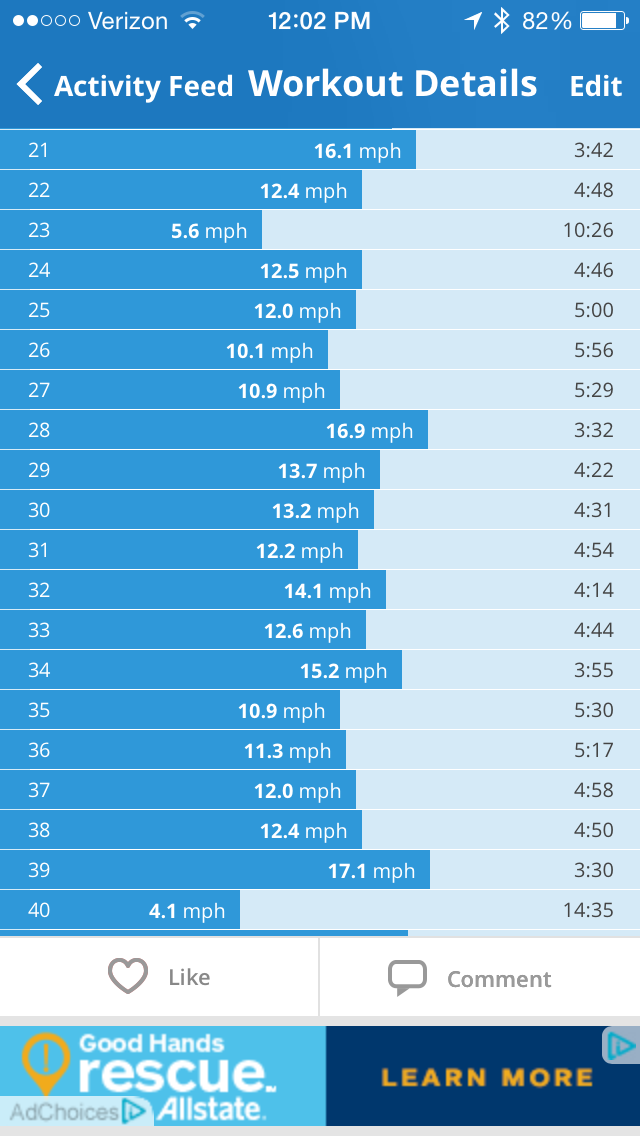
Here are mile splits for the first 76.5 miles. I took a nice break around mile 40 (mostly to eat lots of Puffins!).

80 miler splits 1 80 miler splits 2 80 miler splits 3 80 miler splits 4

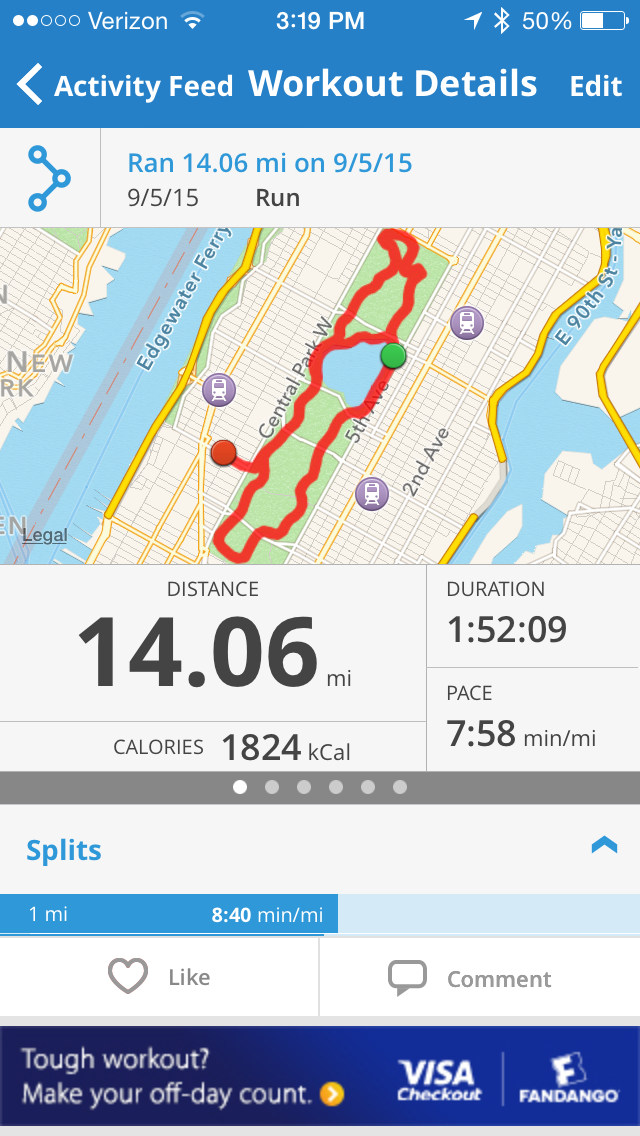
9/5/2015: Morning Run: 8 a.m., 14 miles, Central Park Loop and Bridle Path

IMG_1448-1

The weekly long run is my favorite run of the week. I enjoy most runs, and I can tolerate speed work. Give me a couple hours and the chance to really stretch my legs, though, and I’m no longer running: I’m on a run.

Just awesome stuff. Let’s get into it.

IMG_1446

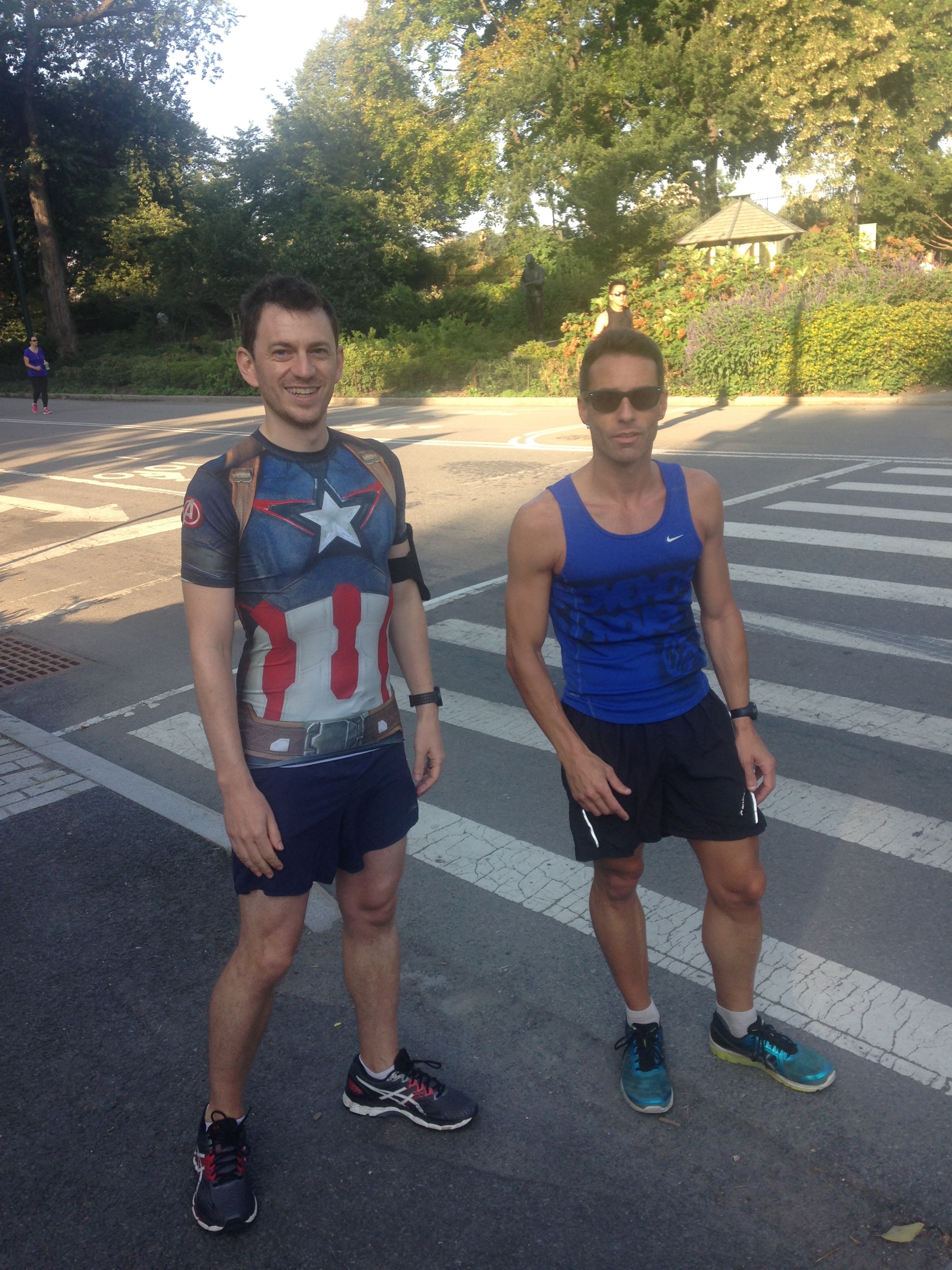
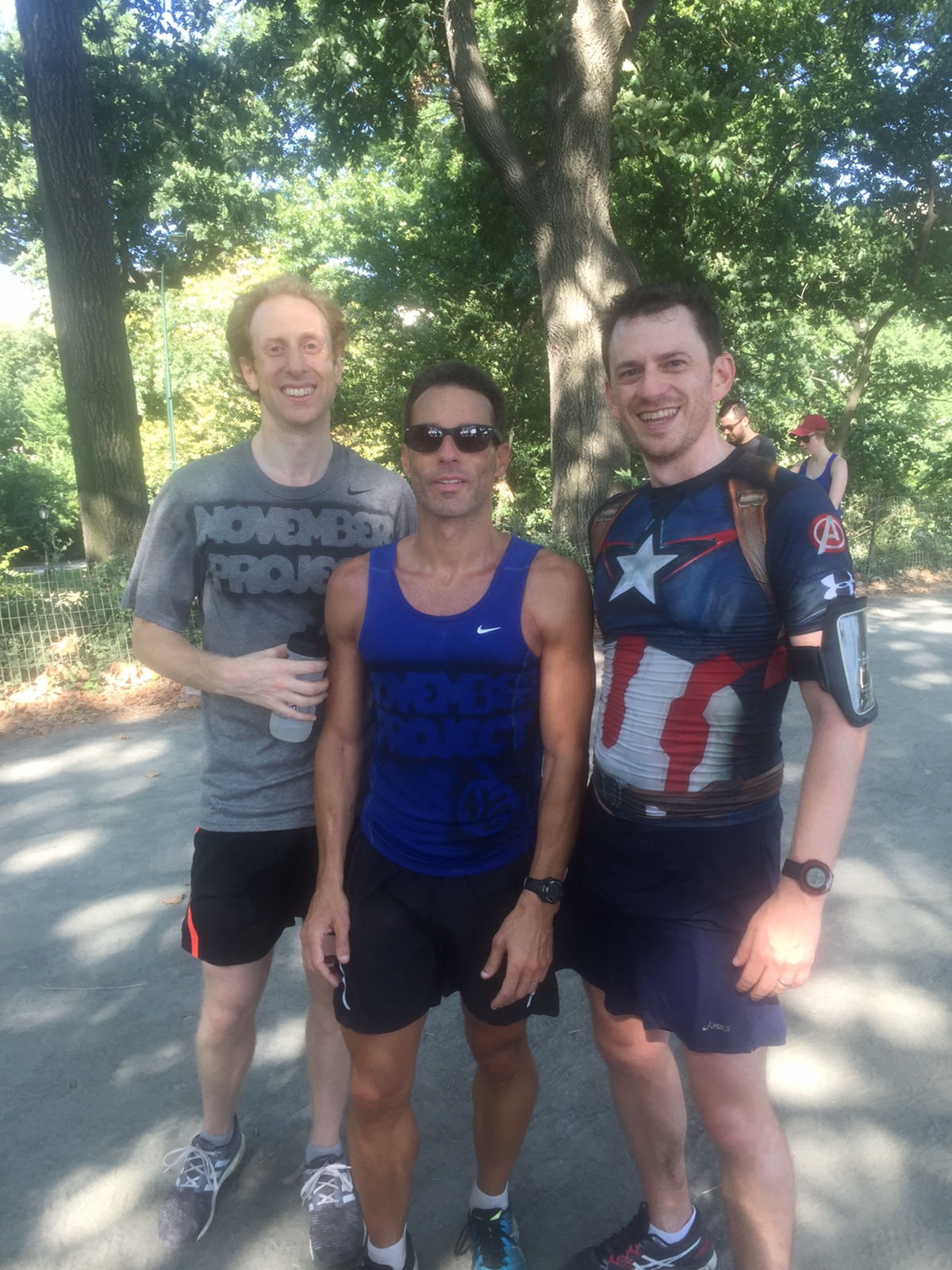
I met Raul and Billy (a/k/a Captain America), two new buddies from November Project NYC, at Engineer’s Gate around 8 a.m. We had a cool breeze and slightly cloudy sky, which felt perfect for an early September run. I have only run with Raul and Billy during NP_NYC workouts, and they can both run forever. They have 10 or 11 NYC marathons between the two of them, so I got some wisdom on what to expect when I run it for the first time this year. We all agreed that the worst thing to talk about during a group run is running, and then proceeded to talk about running for about 70 percent of our run. The other 30 percent was dedicated to life, love, and discussions comparing foam rolling to sexual torture (we are cool guys).

We started slow, but hit our stride on the smaller Harlem hills on the west side. The conversation flowed and my legs kept moving, feet hitting the ground at a strong 180 cadence. Ever since I started training based on the Maffetone Method, I have done most of my runs alone to control my heart rate. Today, however, I found that even though I was running with two strong runners who like to push the pace, my heart rate generally stayed under my target 145 beats per minute. It exceeded that level on Cat Hill and the obnoxious Harlem Hill, but even then it barely cracked 150, so I consider this a solid test of my fitness.

On long runs I carry a water bottle and something to eat. Today I brought a homemade snack cooked following this recipe based on the nutrition discusses in Christopher McDougall’s book Born to Run (I will probably post more on this book at some point). The snack is toasted corn meal a/k/a pinole, chia seeds, agave, and cinnamon, baked into tablespoon-sized bricks. I like them because they provide a natural energy boost without the jitters I get from caffeinated or extra-sugary gels. I ate one before the run, and one around mile 7. I also recognize how amazingly nerdy it is that I make my own running snacks, but I’m OK with that!

When we finished, I felt pleasantly tired but ready for more. That’s how I like to feel at the end of any training run: Like I could do it all over again with a short rest. Thanks to my running buddies Raul and Billy! You guys gave me some extra energy and made me laugh out loud way too often.

IMG_7714.JPG  IMG_1447

Happy running, everyone!